Composite vs. Wood, Two Blocks from Salt Water
Both are good decks when they're built right. They just charge you differently — wood takes a little money and labor every couple of years, composite takes it all upfront. Here's the math without the sales pitch.
The ten-year cost picture
For a typical 16×20 deck on the Grand Strand, here's how the decade tends to shake out. Numbers are ranges, not quotes — your exposure and size move them — but the shape of the comparison holds for nearly everyone.
| Pressure-treated pine | Composite | |
|---|---|---|
| Upfront build | $12,000–$18,000 | $18,000–$25,000 |
| Refinish cycle | Every 2–3 years, roughly $800–$1,500 each | None — soap-and-water wash |
| 10-year upkeep | $3,000–$6,000 | Near zero |
| Board repairs | Cheap, any lumberyard | Pricier; color-matching older lines can be tricky |
| Look at year 10 | Depends entirely on the recoat discipline | Close to year one |
Add the columns and the two materials land closer than their upfront prices suggest. What actually decides it is the row nobody prices: who does the maintenance. If recoating a deck every couple of summers sounds like a fine Saturday, wood is the value play. If it sounds like the chore you'll defer until the deck is gray and splintered — and around here, deferred is the default — composite pays for its premium in never thinking about it.
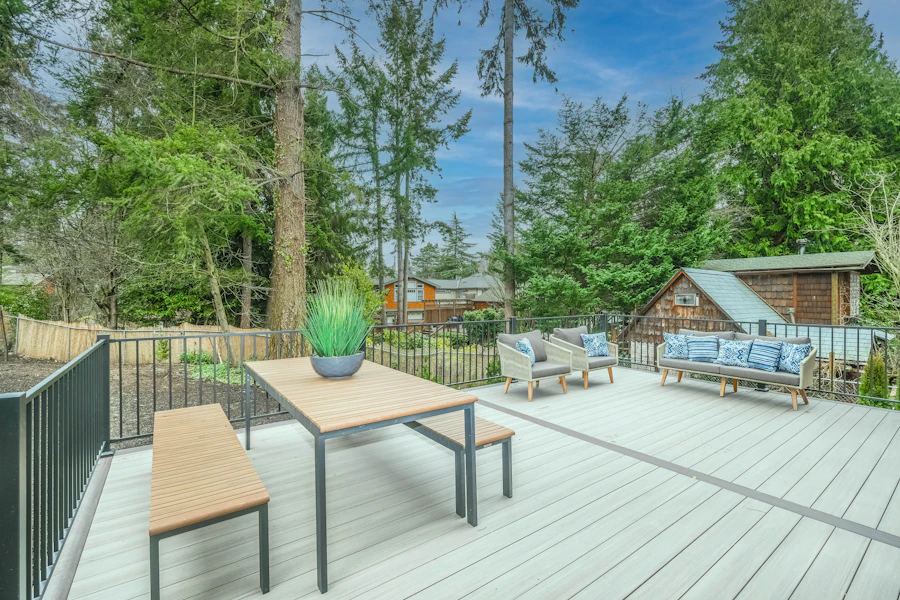
What the coast changes
- UV is doubled trouble here. Beach sun plus reflection fades stain and cooks cheap composite alike. Quality composite lines carry fade warranties; cheap ones chalk. With wood, the coastal recoat clock runs 2–3 years, not the 4–5 an inland deck gets.
- Heat underfoot is real. Dark composite in July sun gets uncomfortably hot for bare feet — lighter colors and shaded orientation matter more here than in any brochure.
- Salt doesn't care what the boards are. Either way, the frame is treated lumber and the hardware is what rusts. A composite deck on corroding builder-grade hangers is still a failing deck — the hardware standard matters more than the decking choice.
- Humidity feeds mildew on both. Composite gets surface mildew that washes off; wood grows it deeper if the seal has lapsed. Neither is maintenance-free, one is maintenance-light.
Price both, decide once
Every build quote we write can come as a pair — the same deck priced in treated pine and in composite, itemized side by side. It's your backyard and your decade; you should get to see both numbers before you pick.
Two quotes, one visit, zero pressure.
Wood and composite decks across Myrtle Beach, Conway, Murrells Inlet, Carolina Forest & Little River.
Call (843) 380-6043