Decks in Conway
Conway is Horry County's seat, set on the west bank of the Waccamaw about fourteen miles from the ocean, and it grew from 17,103 people to 24,849 between the 2010 and 2020 counts. It trades the beach's salt for the river's shade and damp. Decks here fight moisture and mildew more than corrosion — a different enemy that calls for different choices — and on the low streets they answer to the river itself.
Shade is Conway's blessing and its deck problem
Those live oaks that make Conway feel like Conway also keep decks from ever fully drying out. A shaded deck near the river sees less UV fading than one at the beach, but it holds moisture longer after every rain — and Conway gets a little more rain than the beach, a 55-inch normal year against Myrtle Beach's 53.6. Standing damp is what feeds mildew, algae film, and eventually rot in the board ends and stair stringers. Around the historic district we see fifty-year-old porches still going strong next to fifteen-year-old decks that are done, and the difference is almost always drainage and airflow, not age.
When we build in Conway we widen board gaps slightly for airflow, keep skirting ventilated instead of sealed tight, steer shaded decks toward finishes with mildewcide rather than pure water-beaders, and put them on a shorter re-seal cycle. The trees themselves are protected as well as loved: under the city's tree-preservation rules a live oak eight inches or more across the trunk is a protected tree, one of twenty-four inches or more is a landmark, neither comes down without a tree-removal permit, and during construction nothing may be trenched, graded, paved or stored inside the critical root zone, with barriers at the drip line. A deck footing is a hole in that zone, so under a big oak we shift piers, shorten spans or cantilever the edge rather than cut roots — and we say so on the drawing before the inspector does.
How high does a deck have to be in Conway's flood zone?
Two feet above the base flood elevation. The city's flood-damage-prevention ordinance, adopted in December 2021 on the flood maps that took effect the same month, sets that freeboard for new and substantially improved structures, and it exists because of the river. The Waccamaw at Conway reaches minor flood at 11 feet on the gauge and major flood at 14; Hurricane Matthew pushed it to 17.87 feet in October 2016, breaking a record that had stood since 1928, and Hurricane Florence then crested at 21.16 feet on September 26, 2018 — the worst flood the city has recorded. Since then Conway has bought out flood-prone homes with FEMA money, this spring proposing conservation zoning for 57 of those city-owned lots, and raised its elevation requirements. For a riverfront deck that means posts on proper footings, hardware rated for standing water, skirting that lets water through rather than catching it, and one rule from our hurricane guide: a frame that sat in floodwater gets a professional look even if nothing appears to have moved.
Older homes, older decks
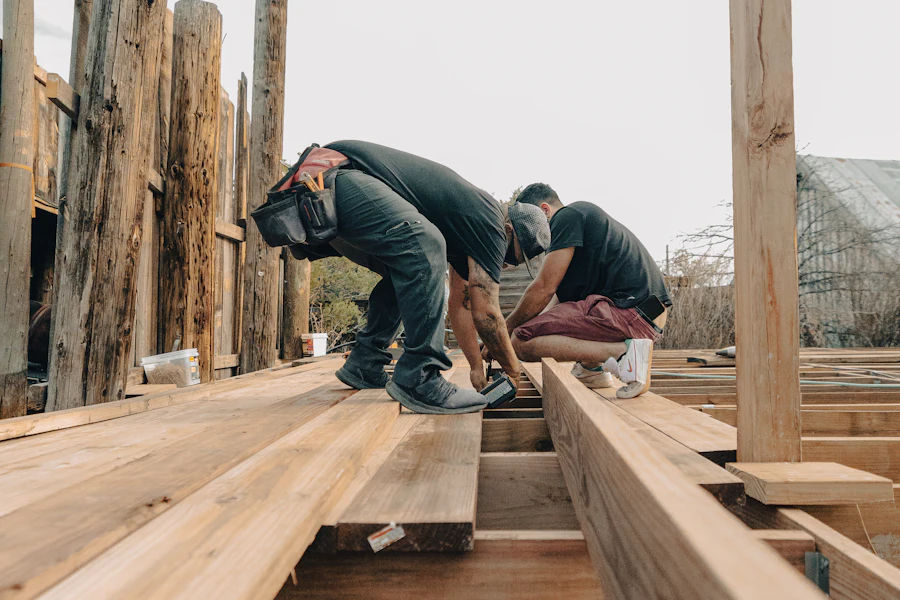
Conway's housing stock runs decades older than Carolina Forest's — the median home here dates to 2001, but 42 percent of the city's homes were built before 1990 — and plenty of its decks were owner-built in eras with looser rules. If your deck came with the house and nobody remembers who built it, a structural evaluation is cheap peace of mind — we check the ledger connection, post bases, and joist hardware, then tell you plainly whether it needs five fixes or a fresh start. Two more Conway wrinkles. The city adopts the current residential code but strikes two of its usual permit exemptions, and a homeowner doing the work personally still needs the permit and the inspections, so "it's just a small deck" is rarely an answer here. And inside the historic design-review districts — the downtown district has been on the National Register since 1994, the residential district since 2010 — exterior work goes to the Community Appearance Board for a certificate of appropriateness, even work small enough to skip a building permit. We prepare that submittal as part of the job.
New builds off 501 and 544
The subdivisions filling in between Conway and the beach are full of homes that came deckless or with a bare-minimum builder platform, and the filling isn't slowing: Horry County grew 30 percent between the 2010 and 2020 counts, the most of any county in either Carolina; hundreds of apartments were approved along 544 and 501 in 2022; city staff have said Conway needs about 3,600 new homes by 2030; and the widening of U.S. 501 between Gardner Lacy Road and S.C. 544 is under way. A custom build here usually costs meaningfully less than the same deck closer to the ocean — inland hardware requirements are gentler, and the price table shows where the savings land — while the wood-versus-composite math tilts a little more toward wood where the UV is filtered through trees. Toward the beach end of that corridor, Carolina Forest's builder decks are a story of their own.
Conway decks, quoted from your backyard.
Also serving Myrtle Beach, Murrells Inlet, Carolina Forest, Surfside Beach & Little River.
Call (843) 380-6043